By Emily (G10) and Noemi (G11)
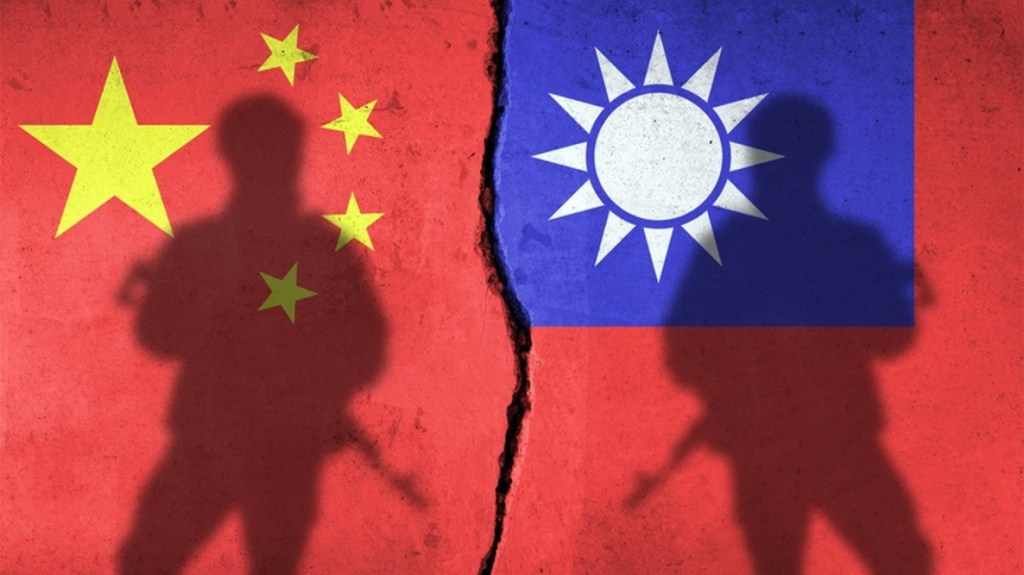
Figure 1: China Taiwan Disputes (“New Article”)
Background Information
The conflict between China and Taiwan is incredibly complex and intricate with main ideas focusing on current border standings, questions about sovereignty and independence and global relations. Strategically China’s push to reclaim Taiwan is grounded in increasing China’s control and prosperity because of its strategically advantageous position geographically. Taiwan is considered to be a military barrier that controls access between the East and South China Seas. Additionally, Taiwan’s high concentration of large technological firms and advanced manufacturing infrastructure makes it invaluable to the global economy.
China and Taiwan became politically separated after the Chinese civil war, in which the Nationalist Party broke its alliance with the Chinese Communist party in 1927 after desiring more political power over the country. In 1949, following the victory of the communist party, the Communist Party under Mao Zedong formed the People’s Republic of China (PRC) on the mainland, while the Nationalist government (Republic of China, ROC) moved to Taiwan and still contended that it was the rightful government of all China.
Current developments
The conflict between China and Taiwan remains an essential yet complex geopolitical struggle to this day. Tensions are primarily driven by the opposing perspectives of the two territories. The People’s Republic of China (PRC) views Taiwan as a rogue state, vowing to eventually unify the island with the mainland under the “One China” principle. However, Taiwan, which has its own democratically elected government, increasingly sees itself as an independent, sovereign state. In the 2016 Taiwanese elections, the Democratic Progressive Party came into power, a centre-left political party that advocates for Taiwanese independence. Ever since, Beijing has significantly intensified political, economic and military pressure on Taiwan. In 2025, China conducted its most extensive war game since 2022, “Justice Mission 2025,” where they circled the island with warships and fighter jets, simulating a blockade around Taiwan. Although China asserts this as simply a “military exercise,” many analysts see it as a show of strength from Beijing and a warning for Taiwan of the consequences of seeking independence.
Future implications
There are global concerns over whether China will really invade Taiwan, and if so, what the implications for the rest of the world would be. After Vladimir Putin’s invasion of Ukraine in 2022, debates over China’s strategy ignited with renewed intensity. Some believe that China will feel emboldened by Putin’s war of aggression and follow in Russia’s footsteps. However, others point out that after Russia’s isolation on the world stage, China will be cautious in using military strength to overpower Taiwan. In reality, a full-scale military invasion would be incredibly costly, a fact that China is well aware of. The most likely scenario is the continuation of military and diplomatic pressure, combined with a potential economic blockade on the island. A crucial factor preventing a military takeover is Taiwan’s role in the global semiconductor industry. Taiwan provides over 60% of the world’s semiconductors which power phones, laptops and AI tools. Taiwan is crucial to both China’s and the world’s economy. Endangering such a profitable industry is a risk the PRC is not likely to take.
Closing remarks
The tensions between Taiwan and China, both historically and currently, reflect growing uncertainty over the future of borders. Whether these countries will remain at a diplomatic stand-off, or if a military conflict will spark is still unknown. However, for some countries where the safety of their borders are uncertain. If action is taken to undermine that country’s sovereignty through military action, human lives (that could have been safe) will be lost. This is why the UN must take action to ensure the continuation of lasting peace and security for vulnerable countries.
Works Cited
Calavaro, Lorenzo. “Understanding the China-Taiwan Tensions: A Strategic Perspective.” Security Outlines, 13 Feb. 2025. Accessed 17 Mar. 2026.
Maizland, Lindsay, and Clara Fong. “Taiwan Explained: Why China Claims It, and Why the U.S. Is Involved.” Council on Foreign Relations, 13 Mar. 2026, http://www.cfr.org/backgrounders/china-taiwan-relations-tension-us-policy-trump. Accessed 17 Mar. 2026.
Taiwan and China: Everything You Need to Know. BBC World Service, 2025. Youtube, http://www.youtube.com/watch?v=LPFML8C6l68&t=1s. Accessed 17 Mar. 2026.
Britannica Editors. “Chinese Civil War”. Encyclopedia Britannica, 6 Feb. 2026, https://www.britannica.com/event/Chinese-Civil-War. Accessed 18 March 2026.
Background and Overview.” Center for Strategic and International Studies (CSIS),
https://www.csis.org/programs/international-security-program/archives/asia-division/background-and-overview. Accessed 18 March 2026.
China’s Increasing Pressure on Taiwan.” Wilson Center,
https://www.wilsoncenter.org/blog-post/chinas-increasing-pressure-taiwan. Accessed 18 March 2026.
China Firmly Opposes US Arms Supply to Taiwan.” Agenzia Nova,
https://www.agenzianova.com/en/news/china-firmly-opposes-us-arms-supply-to-taiwan/. Accessed 18 March 2026.
Kenny, Miles. “territorial disputes in the South China Sea”. Encyclopedia Britannica, 25 Dec. 2024, https://www.britannica.com/topic/territorial-disputes-in-the-South-China-Sea. Accessed 18 March 2026.
“New article ‘China and Taiwan: What the conflict over Taiwan is about.'”
Universität München, 11 Oct. 2023, http://www.unibw.de/ciss-en/news/general/
new-article-china-and-taiwan-what-the-conflict-over-taiwan-is-about.
Accessed 17 Apr. 2026.
 Posted by
