By Julia and Sarah L G10
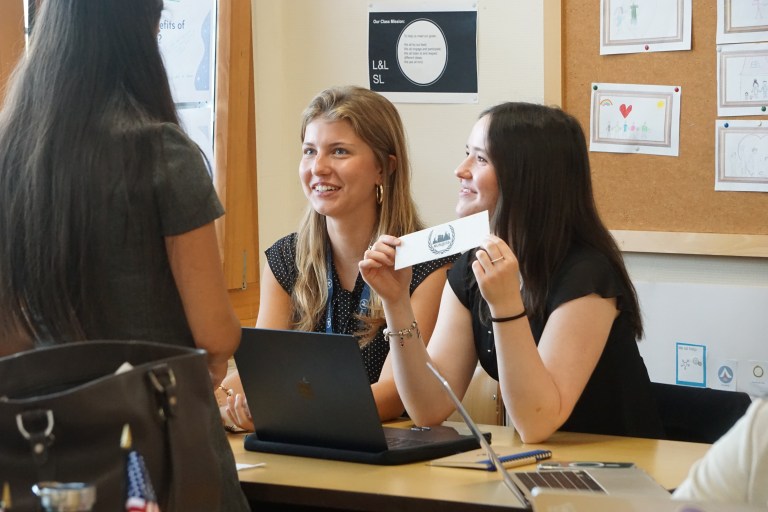
The Historical Security Council met today to debate the U.S. Naval Quarantine during the Cuban Missile Crisis, and things escalated quickly. What started as a discussion about nuclear missiles quickly evolved into alliances breaking, accusations flying, and several delegates accusing other countries of being “puppet states”.
In 1962, after the tensions from the Bay of Pigs invasion, the U.S. discovered Soviet nuclear missiles in Cuba. This led to a tense standoff known as the Cuban Missile Crisis. President Kennedy ordered a naval “quarantine” to stop more weapons from arriving, and both sides argued at the UN as the world feared nuclear war. Eventually, the Soviet Union and the U.S. promised not to invade Cuba, showing how diplomacy can help prevent conflict.
The first resolution proposed, submitted by Yugoslavia, Ghana, and China, started off calling for peace and demobilization, but things quickly turned dramatic.
The United States challenged the resolution almost immediately, calling it vague and biased. Ghana did not take that lightly. They fired back, accusing the United States of being selfish and only caring about its own power. Yugoslavia supported Ghana, accusing it of having an “imperialist vision”. Germany chimed in, suggesting, “This resolution doesn’t even explain how peace will happen”. France agreed that the overall idea was good, but needed some weighty amendments. Meanwhile, accusations of being “puppets” went flying, specifically aimed at the United Kingdom. At one point, Yugoslavia said they were “deeply offended,” and Ghana said that the U.S. was a “threat to every nation in this room”. And just when delegates thought it couldn’t get worse, they realized they were arguing the wrong clause for a chunk of time. Needless to say, the first resolution was dismissed with no votes, no peace, and only hurt feelings.
After the chaos, France proposed a new resolution. This one focused on practical, achievable steps, such as:
- USSR removes missiles from Cuba
- UN monitors everything
- U.S. ends the Naval Quarantine
- U.S. promises not to invade Cuba again
For a moment, the heated discussions stalled. The United States even formally apologized for the Bay of Pigs invasion, which surprised the whole room. The Soviet Union thanked them for admitting and owning up to their mistakes, and it looked like the debate might finally turn peaceful. But the calm didn’t last long. Very quickly, delegates were back to arguing, interrupting, and challenging each other again. China called an amendment a “joke”, Romania declared the debate was being “made into a mockery”, and several delegates had to be warned about personal attacks again. Still, only when things had settled down, the French Resolution passed.
In the end, one resolution was passed, and delegates left the room with mixed feelings and plenty of debate still hanging in the air.
Works Cited
The Editors of Encyclopaedia Britannica, editor. “Bay of Pigs Invasion.” Brittanica, 11 Oct. 2025, http://www.britannica.com/event/Bay-of-Pigs-invasion. Accessed 2 Nov. 2025.
—. “Cuban Missile Crisis.” Encyclopedia Britannica, 15 Oct. 2025, http://www.britannica.com/event/Cuban-missile-crisis. Accessed 2 Nov. 2025.
“The Naval Quarantine of Cuba, 1962.” Naval History and Heritage Command, http://www.history.navy.mil/research/library/online-reading-room/title-list-alphabetically/n/the-naval-quarantine-of-cuba.html. Accessed 2 Nov. 2025.
 Posted by
  ISB MUN