By Lucinda G11
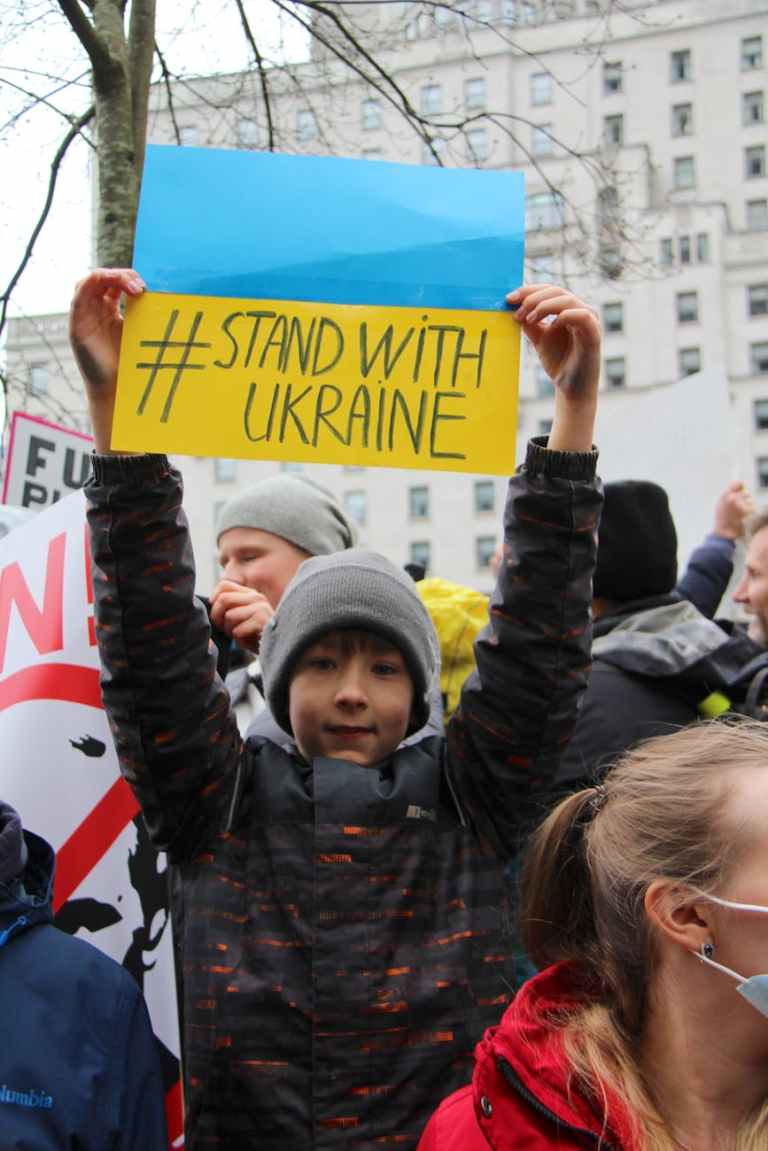
Everyone knows the name Vladimir Putin; lots of people know the name because of the ongoing war between Russia and Ukraine. But people know President Putin in different ways, as a sinner or a saint? A friend or a foe? Depending on what you see, what you hear, and what you know, that answer will vary. In 2014, conflict began. Russia wanted the city of Donbas, land which had once been theirs, back. Between then and 2022, many lives were lost in a back-and-forth conflict over land. News of this conflict was not widely spread until February 2022, when Russia invaded Ukraine with a full-scale attack (Ray). Ukraine fought back with its own troops, and the conflict has been continuing since. During this conflict, there have been countless allegations aimed at President Putin for the war crimes that he has committed.
International Criminal Court Trial
It was on the 12th of September 2025 that Putin’s trial in front of the ICC began, during the weekly meetings held by ISB’s MUN. The prosecution, defence, Judges, and Presidency gathered to determine whether or not these allegations held true and thus if Putin should be held accountable for his actions. At this trial, the topic raised was one suspecting Putin “of the war crime of unlawful deportation of population – in this case, children, and that of unlawful transfer of population – children – from occupied areas of Ukraine to the Russian Federation.”
Prosecution
During the war, there have been many Ukrainian children who have been taken from their homes in Ukraine and forcefully moved into the Russian Federation. Due to countless incidents happening, it can be said that this is done with intent and deliberation under the order of President Putin. This “is not merely a statistic, not just another legal violation. It is the tearing apart of families, the destruction of identity, and an attack on the future of a nation”, as was said by a member of the Prosecution. Upon further investigation, roughly 19,000 children have been forcibly taken from within Ukraine’s border, and while the defence may disagree with the statistics, evidence shows that in March, only 1,263 children had been returned to the safety of their families (Raymond). Amnesty International has documented these crimes and has witnessed testimonies which can attest to what is happening. This action of forced transfer of protected persons, while in itself is a war crime, is also leaving children parentless and unaware of what to do (“Ukraine: Russia’s”).
Defence
It can be argued, however, as the defence did, that many of these children were taken with their own consent and that of their legal guardians. The defence insisted that the prosecution, like much of the press and news, lacked a full context of the situation, and that the children were taken out of what was declared an active conflict for their own safety. They also reassured the prosecution that the children taken were given appropriate healthcare, food, water and education. Quoting the Geneva Convention article 4, the defence argued that it is the ‘duty of the state’ to ensure that the civilians are kept safe. The defence also stated that many of the children were reunited with their families as soon as possible.
Rebuttals and Response
Due to the timing of this meeting, with it being held during school time, there was not any chance for witnesses or lengthy rebuttals, however short rebuttals and responses were allowed and deepened the trial. However, as was highlighted by the prosecution, many of these children, although said to have given consent, did not. Additionally, there has been much proof of children who were taken from their parents and have yet to be reunited. Moreover, even with consent from any child and their parents, it is not the responsibility of Russia to relocate the Ukrainian population. Instead, that responsibility lies with the Ukrainian government and military, who are trying to evacuate children from the most dangerous situations. One boy, aged 11, was taken from his mother during a ‘filtration’ done by the Russian military, which in and of itself is breaking international humanitarian law. This young boy told Amnesty International, “They took my mom to another tent. She was being questioned… They told me I was going to be taken away from my mom… I was shocked… They didn’t say anything about where my mom was going… I have not heard from her since” (Ukraine: Russia’s). This boy is one of thousands who have been separated from their families. Many of these children have been rescued by Save Ukraine. An NGO that puts in time and resources towards rescuing Ukrainian children from Human Trafficking rings, abduction, and identity erasure.
When returning to the Defence’s claim about the children being taken care of, there is controversy. While matters of shelter, water, food and healthcare may be true, the education that the children are being given is a different education than others in Russia. Many Ukrainian children are being subjected to military training, even those as young as eight years old. The report released by Yale University stated that 210 locations were found in Russia, where 62% of the sites had children undergoing reeducation programs and 19% undergoing military training (Kakissis). The reeducation programs the children are being exposed to include “patriotic indoctrination, combat drills, paratrooper training and even classes on how to assemble drones for the Russian armed forces” (Cookman). While these children are learning new things, they are not topics that anyone of that age should ever be subjected to.
Next Steps
With all of these topics laid out for the ICC, the judges must now decide to label Putin as either a man who protects the children in his country or a man who steals children from their families. Should he be labelled as a hero, his actions will go unpunished; if he is convicted, punishments for his actions will be discussed, but the outcome is yet to be shared. This meeting, held by the MUN students in ISB, has helped to keep them informed about current events and politics. Allowing them to further their knowledge in general political practices, as well as help to improve their public speaking abilities and quick-thinking skills. All of which were needed when handling this specific case. These students are now more likely to go on and help people like the children affected in this situation, because they understand more of what the children are going through.
Works Cited
Cookman, Liz. “Russia has network of 200 camps for ‘brainwashing’ Ukrainian children – report.” The Guardian, 16 Sept. 2025, http://www.theguardian.com/global-development/2025/sep/16/russia-has-network-of-200-camps-for-brainwashing-ukrainian-children-report. Accessed 19 Sept. 2025.
Kakissis, Joanna. “Russia Gives Ukrainian Kids Military Training and Reeducation, Yale Researchers Find.” NPR, 17 Sept. 2025, http://www.npr.org/2025/09/17/nx-s1-5544256/russia-ukraine-war-children-military-training-reeducation-yale. Accessed 19 Sept. 2025.
Ray, Michael. “https://www.britannica.com/event/2022-Russian-invasion-of-Ukraine.” Britannica, 14 Sept. 2025, http://www.britannica.com/event/2022-Russian-invasion-of-Ukraine. Accessed 15 Sept. 2025.
Raymond, Nathaniel. “Fact Sheet: Russia’s Kidnapping and Re-education of Ukraine’s Children.” Yale School of Medicine, 17 Mar. 2025, medicine.yale.edu/news-article/fact-sheet-russias-kidnapping-and-re-education-of-ukraines-children/. Accessed 19 Sept. 2025.”Ukraine: Russia’s unlawful transfer of civilians a war crime and likely a crime against humanity – new report.” Amnesty International, 10 Nov. 2022, http://www.amnesty.org/en/latest/news/2022/11/ukraine-russias-unlawful-transfer-of-civilians-a-war-crime-and-likely-a-crime-against-humanity-new-report/. Accessed 15 Sept. 2025.
 Posted by
  ISB MUN