Article By Lucia G10
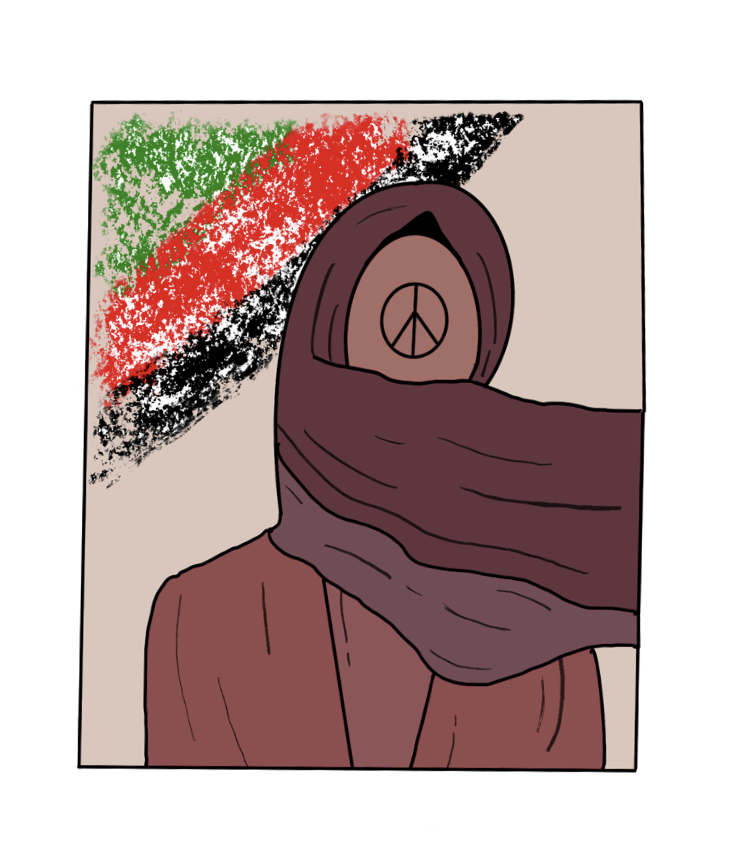
Illustration by Eleanor G9
Photo Credits to Khadija Ahmed, 2016
| The Human Rights Council (HRC) opened its discussions today by addressing the right for women to wear a hijab, a highly debated topic that questions religious freedoms, gender equality, and government intervention. To provide some background, currently, policies on the hijab vary widely. Some countries, such as France, are imposing restrictions on religious symbols, advocating for neutrality and social integration. On the other hand, other countries, such as Iran enforce hijab-wearing, due to their values and morals of upholding religious and cultural traditions. Overall, these opposing approaches to the wearing of hijabs have fueled a global debate over whether these policies are a restriction on women’s rights. |
“Secularism is a pillar of our society.” – France
The countries opened the debate by delivering their speeches on their views on the hijab, expressing heavy disagreement on the topic. France strongly opposed the wearing of hijabs, emphasising the need to “foster neutrality and unity.” Similarly, China enforces a ban of veiling practices worldwide for international security. In contrast, many other nations stated that the banning of religious symbols is a restriction of human rights, with Australia stating that it is “a form of racism, and extremely one-sided,” enforcing self-expression, and religious freedom. Germany highlighted the issue of “uninhibited racism,” urging nations to enact laws supporting religious garments. Following these speeches, the countries went into caucus time to draft resolutions and agreements.
Australia and Egypt lead the first HRC resolution
The first resolution was main submitted by Australia and Egypt, sparking a fierce debate on the role of legal protections surrounding hijab policies. This resolution supports women’s right to choose wearing the hijab without coercion, urging countries to align with human rights standards, enforce anti-discrimination laws, and provide legal support, with sanctions for violations. While nations, such as Egypt voiced support, France opposed the resolution, arguing that such policies might inadvertently deepen discrimination, “exposing them to higher danger.” A speech against the resolution from Canada expressed a shift in views, initially backing religious freedom but later criticizing the resolution, which is trying to support religious freedom, as an “infringement on women’s rights.” As these global perspectives clashed, the resolution raised even broader struggles. Eventually, the committee agreed to split the house, resulting in the resolution failing.
“There should not be a dress code in the workplace” – A statement from Australia on Resolution 2
The debate over Resolution 2, mainly submitted by Canada created intense discussions on religious expression in public spaces and workplaces, due to the implementation of Bill 21.
Germany supported the secular strategies in workspaces stated in the resolution while ensuring protections for those facing discrimination and allowing students to wear them in schools. Australia opposed the resolution, arguing that its approach to secularism restricted religious freedoms, rather than protecting them, stating that “neutralizing religions is banning any form of expressing religions”. Canada countered, by accusing Australia of misinterpreting its intent, stating, “Maybe the Australian delegate has not read this resolution at all, as it is being misunderstood” Egypt criticized Bill 21 for disproportionately targeting women and minorities, submitting an amendment, striking this clause, while France defended workplace restrictions, due to professionalism and security concerns. In the end, this amendment passed. The resolution as a whole was voted on, and passed.
“Racism is inevitable, no matter if religious symbols are worn” – Egypt, in opposition of Nigeria’s resolution
Nigeria and India’s resolution advocated for a complete ban on religious attire, including hijabs, in schools and government institutions. Supporters, such as France, saw it as a necessary step to preserve neutrality in schools and governments, stating that it is for the security and safety of the nations gathered. However, critics, such as Egypt are against the resolution, stating that banning the hijab is a “direct attack on personal choice and religious expression,” calling for countries to vote against the resolution. Nigeria fights back, providing examples of how countries without secularisation have undergone divisions between religions. Egypt responds, prioritizing self-expression. Egypt also states that “racism is inevitable, no matter if religious symbols are worn,” emphasising that symbols are simply self-expression and are a human right. Australia submitted an amendment to strike the clause enforcing laws prohibiting laws on the hijab, the delegate tasks the house to “let society express themselves, let society be true.” France fights back, expressing that religious symbols create further discrimination. After dividing the house, the amendment did not pass. Following this was voting procedure on the resolution as a whole, resulting in the resolution not passing.
Conclusions and Steps Forward
In conclusion, the HRC’s debate on the hijab highlighted the ongoing global tension between religious freedom, cultural practices, and gender equality. Ultimately, all three resolutions brought forward were marked by many stark disagreements. This reflected the difficult balance between personal choice, national safety, and societal norms. Despite the divisions, one resolution passed, and many important moral debates were discussed, underscoring the importance of prioritising human rights in the face of such diversity in views between nations.
 Posted by
  ISB MUN