
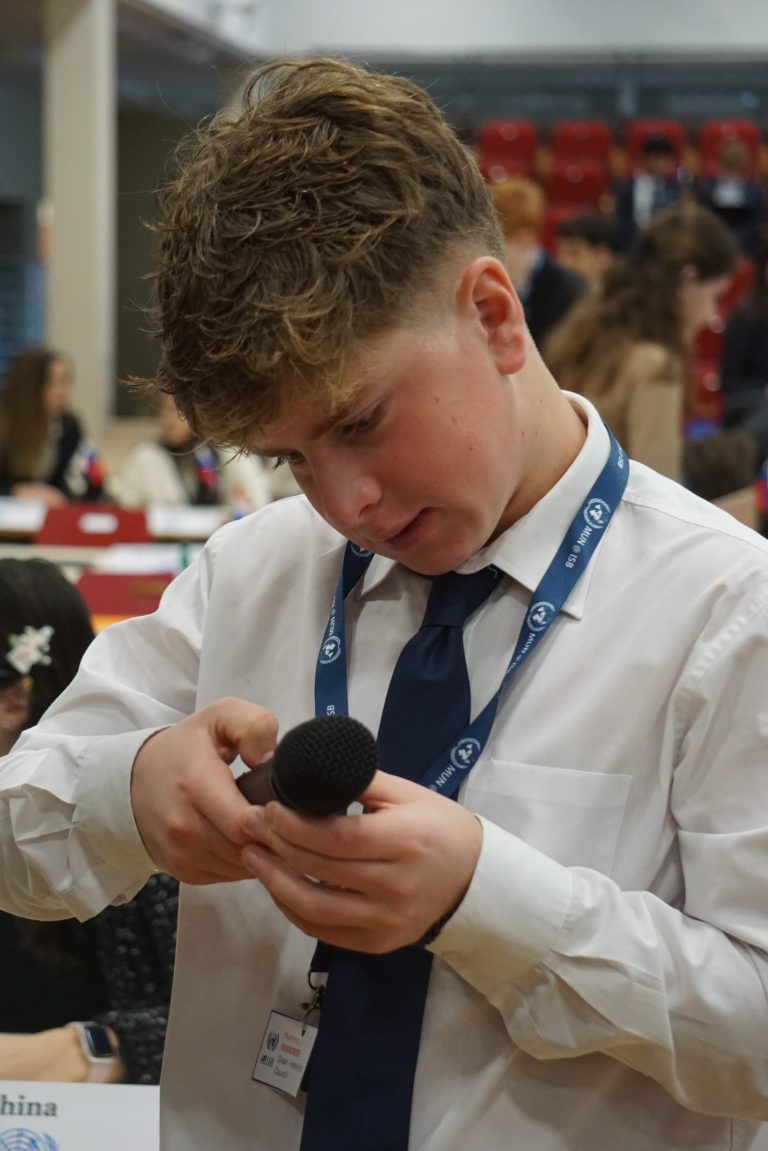
By Azra G11
Chairs are George Pickard and Marshall Goodridge
Interviewer: What inspired you to take on the role of a chair?
Chairs: “For us, the motivation to take on the role of a chair in the Council on Human Rights was driven by our passion for international diplomacy and human rights advocacy. We both have a strong interest in global justice and wanted to create a space where delegates could engage with some of the world’s most critical issues. Being a chair allows us to help foster meaningful conversations about pressing topics like refugees’ rights, gender equality, and freedom of speech—issues that have real-world impact. We also saw it as an opportunity to mentor and guide the next generation of leaders and diplomats.”
Interviewer: What was the most challenging part of preparing for this conference?
Chairs: “The most challenging part of preparing for BAMUN was balancing the need for thorough preparation with the unpredictability of the debates. We spent a lot of time ensuring the topics were relevant and compelling, but we also had to anticipate a wide range of perspectives from the delegates, who come from diverse backgrounds. Designing a framework that would allow for constructive debate and resolution-building—while ensuring that the discussions were respectful and focused—was a challenge. Additionally, creating an environment where everyone feels comfortable speaking up can be tricky, but it’s crucial for effective dialogue.”
Interviewer: How do you ensure all delegates feel included and engaged during discussions?
Chairs: “We believe strongly in inclusivity, so we make a conscious effort to ensure that every delegate has a chance to contribute. We actively encourage delegates who are quieter or less confident to speak, often by calling on them directly or giving them opportunities in smaller group discussions. We also try to create a supportive atmosphere where differing viewpoints are respected, and every delegate feels their voice is valued. In our committee, we focus not just on debate, but on collaboration and solution-building, which naturally draws more engagement from delegates who may have different approaches.”
Interviewer: Can you share up a memorable moment from the lead-up to the conference or the sessions so far?
Chairs: “One particularly memorable moment was during the opening session, when delegates were asked to introduce themselves by sharing a human rights issue they felt passionate about. It was incredible to hear the wide range of issues people were focused on—from the rights of indigenous populations to freedom of expression in digital spaces. This moment showed us just how diverse the concerns of delegates are and how interconnected human rights are around the world. It was a powerful reminder of the importance of platforms like BAMUN for global dialogue.”
Interviewer: What advice would you give to future chairs or delegates?
Chairs: “‘Be prepared, empathetic and open to learn from your team.’ For future chairs, our advice is to remain flexible and patient. Every session can take unexpected turns, and as a chair, it’s your job to ensure that debates remain respectful and productive. Be prepared to moderate difficult conversations and manage moments of tension, but also create an environment where creativity and diplomacy can flourish. For delegates, we recommend coming to the conference prepared with a deep understanding of the topics, but also with an open mind and a willingness to listen. Collaboration and compromise are key in crafting effective resolutions. Lastly, have fun! This is a learning experience and a chance to connect with like-minded individuals who share your passion for global issues.”
 Posted by
  ISB MUN