
By Aabha
Byline: Economic Collapse and Political Turmoil Grip Lebanon
Lebanon is in the midst of a severe crisis, one of the most devastating in its history. A combination of political instability and economic collapse has left the nation struggling to provide basic services to its citizens. Inflation has skyrocketed, the Lebanese lira has lost over 90% of its value, and over 80% of the population now lives below the poverty line (2024 Israeli).
Escalating Conflict and Displacement
The most recent phase of Lebanon’s crisis began in October 2024, with heightened tensions between Hezbollah and Israeli forces. The Lebanese Ministry of Health has reported, “over 1,500 deaths since the conflict began in October 2023, with over 600 occurring in just the last week” (Giovetti). The violence has primarily affected southern Lebanon but has also spread to other areas, exacerbating the already dire situation for civilians. This conflict has resulted in an unprecedented level of displacement. Since September 23, 2024, “the government reported that 1 million people are now displaced – roughly 20% of the country’s population – with 900,000 people fleeing in the last week alone” (Giovetti). This marks one of the most significant internal displacements in Lebanon’s history, with families relocating to urban centers like Beirut, Mount Lebanon, and Tripoli (Giovetti).
The Plight of Refugees
Lebanon has long been a major host for refugees, particularly from neighboring Syria. As of 2024, “Lebanon is the largest host country for refugees per capita. Out of the population estimated by the World Bank at 5.3 million people, 1.5 million are refugees. Most are from neighboring Syria” (Giovetti). Syrian refugees, who once fled the war in their homeland to seek safety in Lebanon, are now trapped in an increasingly hostile environment with limited access to shelter and basic necessities. Many of these refugees are now facing impossible choices, as the conflict spreads across Lebanon. As of September 30, the UNHCR has reported approximately 100,000 people fleeing to Syria in order to escape violence (Giovetti). This reversal of movement highlights the desperate situation, with people fleeing a country that once offered them refuge but is now engulfed in violence.
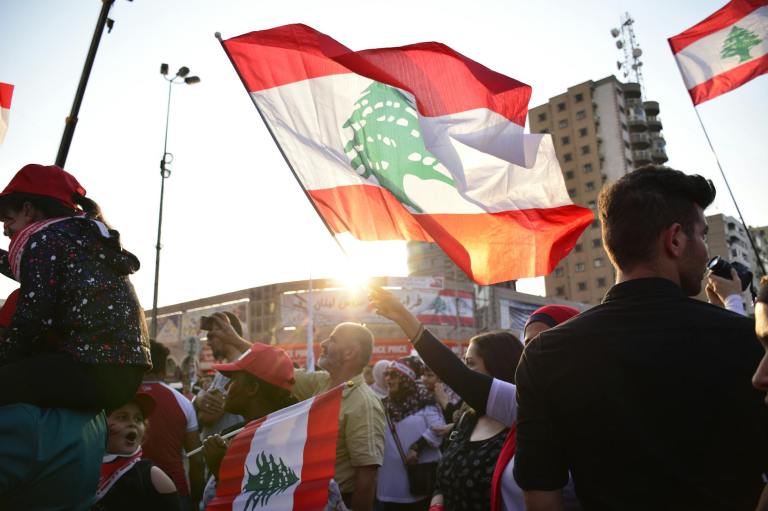
The political deadlock, fueled by sectarian divisions, has prevented any meaningful reforms. The resignation of Prime Minister Hassan Diab’s government following the 2020 Beirut Port explosion exposed the deep-rooted corruption within Lebanon’s political system. Protests have erupted as citizens call for accountability and reform, but the crisis continues to deepen (Center for Preventive Action).
International organizations like the IMF have offered assistance but with conditions for reforms that Lebanon’s political leaders have yet to implement. French President Emmanuel Macron has warned that Lebanon risks total collapse without immediate change (Giovetti).
As the Lebanese people face a crumbling economy and an uncertain political future, the world watches to see if the country can emerge from this crisis.
Works Cited
Giovetti, Olivia. “The Crisis in Lebanon, Explained.” Concern Worldwide US, 2 Oct. 2024, concernusa.org/news/lebanon-crisis-explained/. Accessed 13 Oct. 2024.
Center for Preventive Action. “Conflict With Hezbollah in Lebanon.” Global Conflict Tracker, 8 Oct. 2024, http://www.cfr.org/global-conflict-tracker/conflict/political-instability-lebanon. Accessed 15 Oct. 2024.
“2024 Israeli Invasion of Lebanon.” Wikipedia, Wikimedia Foundation, 15 Oct. 2024, en.wikipedia.org/wiki/2024_Israeli_invasion_of_Lebanon. Accessed 15 Oct. 2024.
 Posted by
  ISB MUN