
By Adeline G11
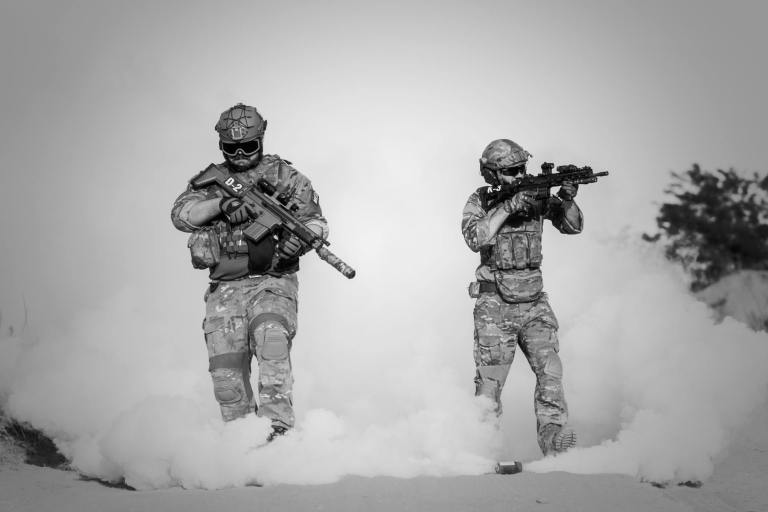
Today, the security council discussed the question of Russia’s Wagner groups and their violations of human rights. The Wagner group is a state-funded private military company (PMC) that has been known to operate in over eleven countries, though is expected to have had activity in a number of others. PMCs are banned under article 13.5 of the Russian constitution, but the group is still active both in and out of Russian territory. The government refutes any form of connection to the group, but gave them over 86.3 billion RUB, equivalent to nearly one billion USD, between 2022-2023 alone.
The first resolution, which was submitted by the United States and France, acknowledged Russian sovereignty while urging action against the Wagner Group. The resolution proposed the creation of the Wagner Group Task Force under the UN, encouraged nations to place sanctions and regulations against supporters of the Wagner group, promoted prosecution of Wagner group members, provision of aid to countries affected by the group’s human rights violations, and suggested further investigation into the monetary donations made through the Wagner group and the Russian Federation.
After a discussion of what the resolution entailed and a friendly amendment by Switzerland, France proposed a friendly amendment to the second clause. The clause encouraged member states to enforce sanctions and regulations on Russian involvement with the Wagner group and place automatic judgment on any party supporting the group, but the resolution suggested that sanctions be replaced by direct and immediate punishment by the task force proposed in the resolution.
This sparked a heated debate, with many countries chiming in. The delegation of Russia objected to the amendment, questioning the use of NATO and the EU in the resolution as they are mainly representative of Western countries. The delegation reminded the council that NATO represents only 16.3% of Earth’s habitable land, and should therefore not decide what happens to the Wagner Group. However, the delegation of France defended their resolution, stating that the task force would operate under the UN, the most international organization on Earth, and that if the delegation is still concerned about a Western bias, the group implicitly endangers many European nations due to Russia’s stance.
The delegation of France clarified points of inquiry, using the Central African Republic as an example of how the group and its benefactors will be investigated and punished. Each case will be different due to the countries involved and extent of the human rights violations, but the only way to address these organizations is through intense investigation into their actions, followed by intense repercussions. The delegation of the United Kingdom supported the amendment, assuring the council that diplomatic pressure will be used to maximize negotiation and that military pressure will never be the only response, agreeing with the delegation of France’s statement that military intervention is not ideal and is not what the amendment proposed, but must sometimes be used in situations that call for an extreme intervention.
Finally the voting procedure was in order, and the amendment passed with a slight majority. Debate ensued, and shortly after the voting procedure on the resolution as a whole, was in order. When the countries with veto power stepped outside the room, the delegation of Russia initially vetoed the resolution. However, the delegation of the United Kingdom spoke frankly, suggesting against this decision. The delegation of France reported that this would appear as an “admission of guilt” after the country’s government had denied affiliation with the Wagner group on multiple occasions. Eventually, the delegation of Russia rescinded their veto. The delegate said this was because vetoing such a resolution would result in a negative portrayal of the nation by the international community, and that not supporting the Wagner group “builds relationships with the countries that have been affected.”
Ultimately, the council’s debate was fruitful and constructive. According to one of the chairs, “there was a lot of constructive debate between delegations … they all worked together really well and all raised amazing, valid points.”
 Posted by
  ISB MUN